
.png)
Reclaimed Douglas Fir Beams in Denver: From Vestas Wind Turbine Transport to Custom Mantel
- Sarah Miller

- Jun 28
- 6 min read
Author: Sarah Miller | Read time: 6 min
Most reclaimed wood in Denver has a story about where it slept. Our reclaimed Douglas Fir beams have a story about where they traveled. These beams spent years cradling 150-foot wind turbine blades on flatbed trucks bound for Vestas in Brighton, Colorado — one of the largest wind energy manufacturing hubs in North America. When the blades shipped out, the timbers stayed behind. That's how a piece of Colorado's clean-energy supply chain ends up holding up your fireplace mantel.
If you've been searching for reclaimed Doug Fir beams in Denver, this is the backstory of the beams sitting in our yard right now — and what you can do with them.
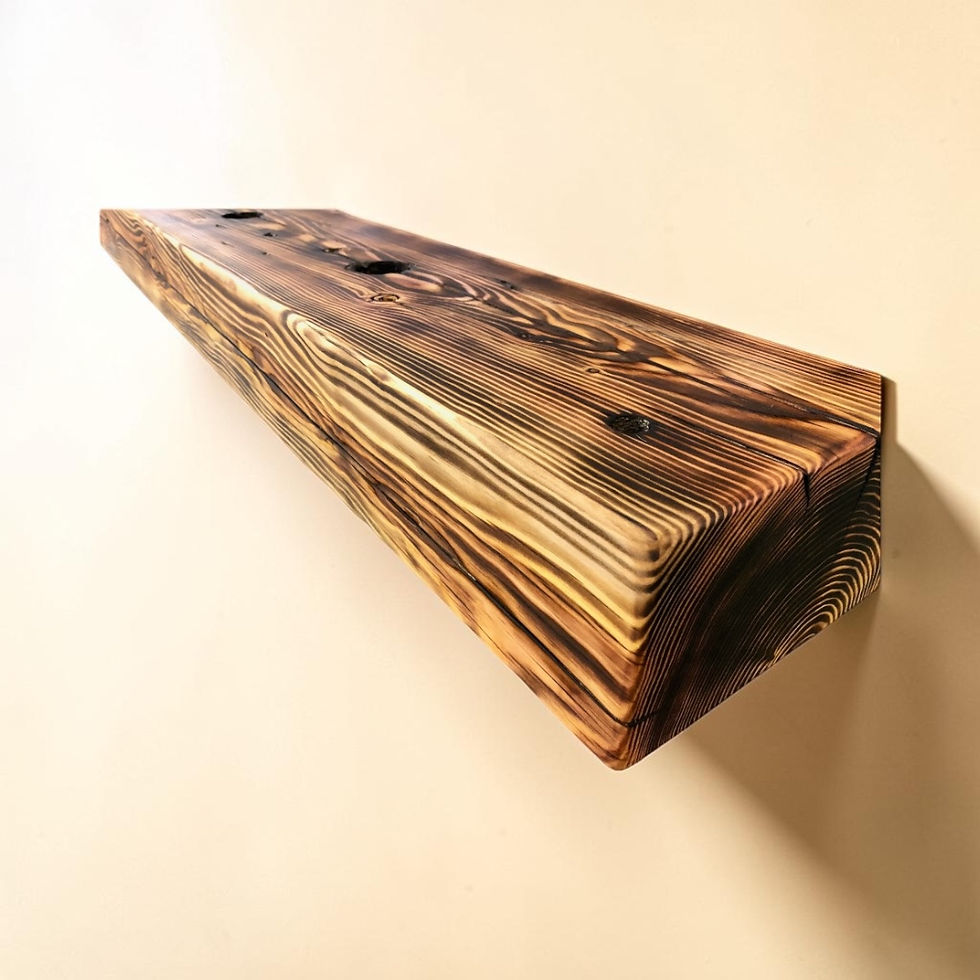
The journey from wind turbine transport to your living room
Vestas operates four manufacturing facilities in Colorado, with the Brighton plant producing the massive blades you see crossing I-70 strapped to flatbeds. To survive that ride, the blades need cradles — heavy timber crating made from straight, structurally sound Douglas Fir and White Pine. The wood has to be strong enough to support multi-ton blades, dimensionally stable enough not to twist on the highway, and inexpensive enough that it can be used once and retired.
That's exactly the kind of timber you want for reclaimed beam projects. The wood is already kiln-dried by years of Colorado sun, structurally sound, and full of character from the straps, bolts, and weathering that came with the job. Instead of getting chipped or burned, these beams come to our yard at 800 S Jason Street and start a second life.
Reclaimed Doug Fir beam specs and pricing
We currently stock two main sizes of reclaimed Vestas timber:
Dimension | Price | Best Use |
10.5 ft × 6 in × 8 in | $140 each | Fireplace mantels, faux ceiling beams, headers |
50 in × 6 in × 8 in | $70 each | Floating shelves, short mantels, hearth fronts |
All beams are kiln-dried Douglas Fir or White Pine, structurally sound, and untreated. Each one is a little different — that's the point. Expect honest character: nail holes, strap marks, weathered ends, and the occasional knot. We do not sand, stain, or finish before sale; you choose the look.
If you want larger or heavier timber, we also carry Colorado commercial-grade Doug Fir beams at 144 in × 12 in × 3 in ($216 each, $18 per linear foot) and a small inventory of 1911-vintage Doug Fir support beams salvaged from a historic Union Station building (priced per cut from $256 to $1,253). We'll cover the 1911 Union Station beams in detail in a few weeks.

Why Douglas Fir is the right Denver mantel wood
There's a reason Douglas Fir has been a Front Range building staple for over a century. A few things make it especially well suited to reclaimed mantel and beam work in Denver:
It holds straight. Doug Fir has a low shrinkage rate compared to other softwoods, which matters in Colorado's dry climate. A beam milled in 1990 still sits flat in 2026.
It takes finish beautifully. The grain is tight and even. A clear oil pulls out warm amber tones; a dark stain reads almost like walnut.
The patina is real. Decades of weather, sun, and use give reclaimed Doug Fir a soft gray-brown surface you literally cannot fake. No factory distressing process produces this depth.
It's hardy enough for hearths. Doug Fir's density and resin content make it appropriate for above-fireplace installs when you follow proper clearance codes.
If you're comparing reclaimed Doug Fir vs. reclaimed oak for a mantel, the short version: oak is harder and heavier; Doug Fir is lighter, easier to mount, and gives that warmer, softer Colorado-cabin look most Denver homeowners are after.
Six ways to use a reclaimed Doug Fir beam
A 10.5-foot beam at $140 is one of the best material values in our yard. Here are the most common projects we see customers tackle:
Floating fireplace mantel. The classic. Mount on hidden steel rods (we sell Ultrashelf brackets sized for these beams) for a clean floating look.
Faux exposed ceiling beam. A single beam across a vaulted ceiling instantly changes the room. Use construction adhesive and hidden screws into a 2×4 cleat.
Above-window header detail. A short cut over a kitchen window or barn door adds weight and warmth to an otherwise blank wall.
Range hood wrap. Hollow out a U-channel and slip it over a stainless or drywall hood for a custom range hood at a fraction of millwork cost.
Headboard or bed frame element. A beam mounted horizontally above the bed becomes a focal point; two stacked makes a queen-sized headboard.
Outdoor pergola or landscape timber. Doug Fir's resin content makes it weather-tolerant for covered outdoor use.
For larger projects — full timber-frame accents, kitchen islands, conference tables — we recommend looking at our reclaimed barn beams or boxcar flooring instead, since they come in heavier dimensions.
Reclaimed Doug Fir vs. other reclaimed beam options
A lot of Denver buyers come in asking which beam is "best." The honest answer is best for what. Here's how we frame it:
Choose reclaimed Doug Fir (Vestas) if you want a clean, straight beam under 11 feet, a mantel-sized profile, and the lowest price per piece in the yard. Best for first-time DIY mantel installs.
Choose hand-hewn barn beams if you want visible joinery (mortise and tenon, axe-cut faces) and 100+ year-old history. Heavier, more expensive, and full of character.
Choose 1911 Union Station Doug Fir if you want a piece of Denver architectural history and don't mind paying more for it. Up to 20 feet long, with rich dark patina.
Choose Colorado commercial Doug Fir if you need a 12-foot board that's wider and flatter than our Vestas stock — better for stair treads, mantel shelves, or long shelving runs.
If you're still not sure, walk into the yard. We have all four in stock at any given time, and the difference is obvious the moment you put a hand on them.

How to prep, mount, and finish a reclaimed Doug Fir beam
Most of our beams are ready to install after a light cleanup. Here's the standard process we walk customers through:
Prep. Brush off loose dirt with a stiff nylon brush. If the surface feels splintery, hit it lightly with 120-grit sandpaper — go gentle so you don't kill the patina. A vacuum with a brush attachment finishes the job.
Finish. Three options depending on the look you want. Leave it raw for the most authentic feel. Apply a clear penetrating oil (like Rubio Monocoat or Osmo) to deepen the natural color without changing it. Or use a satin polyurethane if the beam will see hands and dust.
Mount. For a mantel, the standard method is a 2×4 cleat lag-bolted into studs, with the beam hollowed slightly to slip over the cleat. We also carry Ultra Brackets floating mantel hardware (58 inches long with 4-inch or 6-inch rods, $165) if you want hidden steel rod mounting. For ceiling installs, screw and glue to a hidden 2×4 cleat anchored to joists.
Clearance. If your beam is going above a wood-burning fireplace, check Denver building code for minimum clearance from the firebox opening. Combustible mantels typically need at least 12 inches of clearance above the opening, with more if the beam projects over the firebox.
Frequently asked questions
Are these beams structural? They were originally structural in their wind-turbine-transport role, and they're structurally sound today. However, we sell them as decorative and light-load architectural elements. If you need a load-bearing beam, consult a structural engineer first.
Can you cut them to length for me? Yes. We offer in-yard cuts for an additional fee. Bring your measurements and we'll size your beam before you load it.
Do they have nails or metal in them? Most beams have some surface hardware (staples, strap marks, occasional embedded fasteners). We do a magnet pass before they hit the showroom, but plan to check with a metal detector before you cut.
How do they ship? We don't ship beams — these are pickup only at our Denver yard. Bring a truck or open trailer; we'll forklift load.
What's the difference between Doug Fir and White Pine in your inventory? Doug Fir is denser, darker, and slightly heavier; White Pine is lighter, softer, and takes stain a bit differently. Both are sound for mantel work. Come pick the one whose grain you like best.
Come see them in person
Reclaimed beams are one of those materials you really need to touch before buying. The patina, the weight, the grain — none of that translates over a screen. Stop by the yard at 800 S Jason Street, Denver, CO 80223, Tuesday through Saturday. We'll walk you through what's in stock, talk through your project, and help you pick the right beam.
If you're driving in from Boulder, Fort Collins, Colorado Springs, or anywhere on the Front Range, the trip is worth it — we hear that from customers every week.
Call: 720-236-0454
Visit: 800 S Jason Street, Denver, CO 80223 — last unit on the left
Hours: Tuesday–Friday 10am–5pm, Saturday 10am–4pm


Comments